
You may not need to leave home for the whole job. Painting a home while living in it is usually manageable when work is limited to one or two rooms, but avoid sleeping in a freshly painted room for at least 24 hours after low-VOC water-based paint, or 2–3 days after oil-based paint. Keeping the work area separate and ventilated makes the difference.
It’s understandable to worry about fumes, children’s routines and where everyone will sleep, especially when bedrooms or shared spaces are being painted. Whether you can stay home depends on the paint, which rooms are being worked on and whether anyone in the household is sensitive to fumes.
This guide explains how to weigh those concerns, keep children and pets away from active work and prepare rooms before painting begins. You’ll also find a practical way to decide whether to sleep at home, use another room or stay elsewhere during a larger project.
Key Takeaways
- Ventilation matters even with low-odour paint: plan how fresh air will move through the work area and keep it ventilated as the paint dries.
- Keep children and pets out of active work areas, and take extra care when anyone at home is sensitive to fumes.
- Clear room access and protect belongings before work begins to make preparation and daily routines easier to manage.
- Decide where everyone will sleep before painting starts; working room by room can help keep parts of the home usable.
1. The Real Concern: Are Paint Fumes Dangerous?
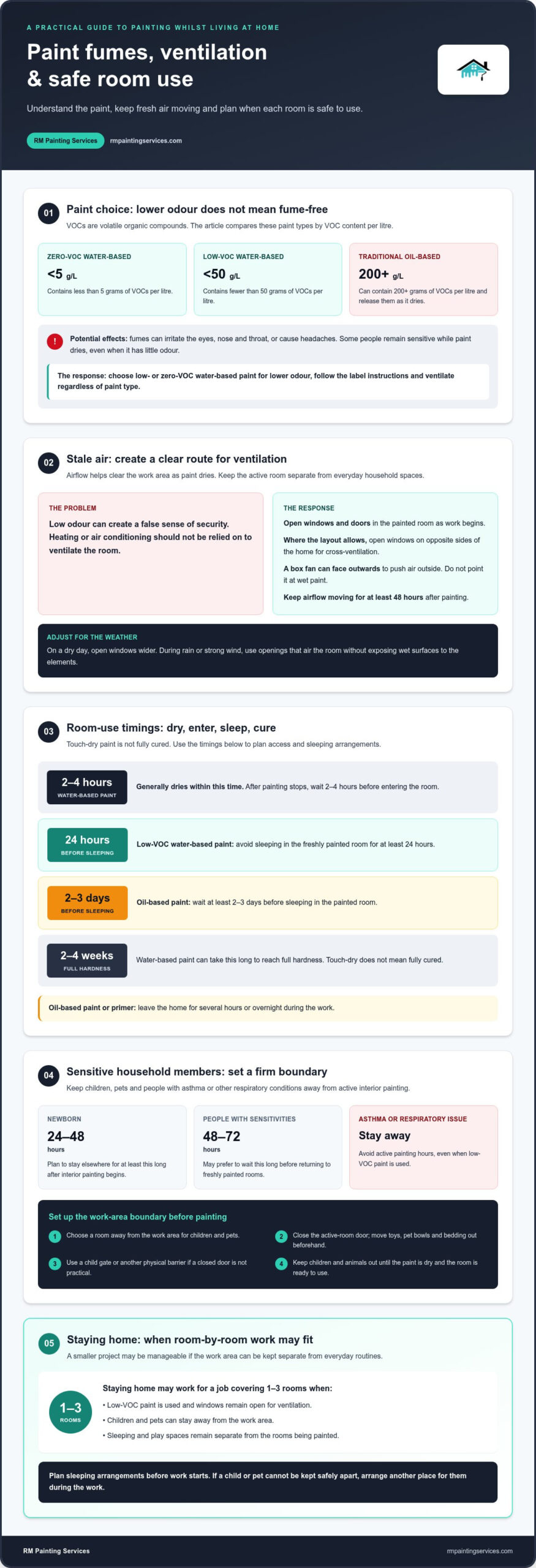
Low-odour water-based interior paint is a practical choice for occupied homes in Ireland. Low-VOC paint contains fewer than 50 grams of volatile organic compounds per litre; zero-VOC paint contains less than 5 grams per litre. These products generally smell less than older oil-based paints, but low odour doesn’t mean fume-free. Some people remain sensitive while paint dries.
Traditional oil-based paints can contain 200+ grams of VOCs per litre and release them into the air as they dry. Exposure can irritate the eyes, nose and throat, or cause headaches. Choose a low- or zero-VOC water-based paint for lower odour, and follow its label instructions. No paint type makes ventilation unnecessary.
Open windows and doors in the painted room as work begins. If the layout allows, open windows on opposite sides of the home to create cross-ventilation. A box fan facing outwards can push air outside; don’t point it at wet paint. Keep airflow moving for at least 48 hours after painting. Avoid relying on heating or air conditioning to ventilate the room.
Weather affects how easily you can ventilate. On a dry day, open windows wider; during rain or strong wind, use openings that keep the room aired without exposing wet surfaces to the elements. Water-based paint generally dries within 2–4 hours, but touch-dry paint isn’t fully cured. Allow 24 hours before sleeping in a low-VOC water-based painted room; full hardness can take 2–4 weeks.
To paint one room at a time with less disruption, clear and ventilate that room first, then keep household routines in the remaining rooms. Close off the active work area from children and pets, and plan where people will sleep before starting a bedroom. After painting stops, wait 2–4 hours before entering the room, then continue ventilation as it dries.
Children, pets and household health sensitivities
Paint fumes can irritate the eyes, nose and throat, and may cause headaches. Take extra care to keep children, pets and people with asthma or other respiratory conditions away from active interior painting. Keep them out of the work area even if the paint has little odour.
For a newborn, plan to stay elsewhere for at least 24–48 hours after interior painting begins. People with sensitivities may prefer to wait 48–72 hours before returning to freshly painted rooms. Anyone with asthma or another respiratory issue should stay away during active painting hours, even when low-VOC paint is used.
To reduce contact with wet paint and fumes, set up a clear boundary before work starts:
- Choose a room away from the work area where children and pets can stay.
- Keep doors to the active room closed, and move toys, pet bowls and bedding out beforehand.
- Use a child gate or another physical barrier where a closed door isn’t practical.
- Keep children and animals out until the paint is dry and the room is ready to use.
Staying home may work for a smaller job covering 1–3 rooms, provided low-VOC paint is used, windows remain open for ventilation, and children and pets stay away from the work area. Keep their usual sleeping and play spaces separate from the rooms being painted. If a child or pet can’t be kept safely apart, arrange another place for them during the work.
Before painting begins, consider who will be home during drying and where they can spend time without entering the work area. A room-by-room plan can help protect household routines; planning an interior painting project around those needs can make the arrangement clearer.
3. Preparing rooms before painters arrive
DIY may suit a small room if you have time to prepare and paint carefully. For several rooms, difficult repairs or extensive sanding, professional painters can organise the sequence and keep the project moving. Before moving furniture, decide which room to paint first and where household members will stay.
Remove small belongings, ornaments and wall hangings from the room. Move furniture out where possible, or group it away from the walls. Cover remaining furniture and protect floors and trim before filling nail holes. Sand repaired areas, then prime problem spots so the surface is ready for paint. If someone who is pregnant will be at home, plan how they can avoid prolonged exposure during the work.
Use this order to prepare the room and contain the work:
- Choose one room and move its contents or gather them in a protected area.
- Cover the floor and furniture, then tape edges that need a clean finish.
- Fill nail holes and allow repairs to dry before sanding them smooth.
- Prime problem areas, such as patches that may absorb paint unevenly.
- Cut in edges around trim and corners before rolling the larger wall areas.
- Keep the room clear while each coat dries, then restore belongings when ready.
Interior surfaces need sound preparation before painting. Dust from sanding can settle on fresh paint, so remove it before applying the first coat. Plan for at least two coats, and keep the room workable between them. Furniture should not block access to walls or trim. For practical advice on how painters protect floors, including choosing coverings that stay secure, prepare the floor before work begins. For guidance on budgeting and preparing for a clean house painting service, consider the rooms and surfaces involved and the preparation they need.
A professional painter can manage preparation and application, while DIY means organising each task yourself. Choose the approach that suits the room’s condition, the number of surfaces and the time you have. A written room-by-room plan helps everyone see which areas are clear, protected or still being worked on.
4. Sleeping at home during painting
For a room painted with low-VOC water-based paint, wait 24 hours before sleeping there. For oil-based paint, wait at least 2–3 days; if the project uses oil-based paint or primer, leave the home for several hours or overnight during the work. Painting a home while living in it is easier to plan when sleeping arrangements are decided in advance.
Staying home is usually practical when painters can work room by room and the household has an untouched bedroom. Keep that sleeping space away from active work, with the door closed and windows opened safely for fresh air. Don’t use a newly painted room just because the surface feels dry. Dry to the touch does not necessarily mean ready for overnight use.
A bedroom with standard walls and trim may remain an active work area for one to two days. Arrange somewhere to sleep before work begins, and move bedding, clothes and children’s belongings elsewhere. If there’s only one bedroom, plan to sleep in another part of the home or stay elsewhere until the recommended waiting period has passed.
For whole-house interior painting, consider staying elsewhere during the first day or two. This can reduce exposure to active work and avoid the nightly shuffle between rooms. A larger project may leave the household sharing one usable living space for a minimum of two weeks, so agree which areas will remain accessible each evening. Painting a home while living in it also means planning how everyone will use that shared space.
Dust can affect your decision. Sanding and paint removal can spread dust, so households with young children or respiratory concerns may want to stay elsewhere. People with asthma or other respiratory issues should stay away during active painting hours, even when low-VOC paint is used. Ventilation still matters: open windows to help clear the air after work.
Before the first coat, decide where everyone will sleep and which rooms remain off-limits. Plan your painting project around bedroom access and household routines.
RM Painting Services: Residential Painting
RM Painting Services provides residential and interior painting for homeowners planning work around daily life. The team protects floors and furniture, cleans up daily and provides a clear quote before work begins. These practical steps help keep rooms orderly while the project is under way.
For a single bedroom or several interior rooms, discuss the areas to be painted and how the work may affect access to your home. A clear scope helps you plan sleeping arrangements, move belongings and keep household routines in mind before painting starts.
For a residential painting project, contact RM Painting Services to discuss your home.
Make the next step fit your household
Before arranging the work, note which rooms matter most, which routines cannot be interrupted and where everyone can spend time during the project. This gives you a clear starting point for discussing the job and organising access around your home. Painting a home while living in it is easier to manage when these practical details are settled before work begins.
RM Painting Services provides residential, interior and commercial painting across Tralee and County Kerry. If you’re ready to discuss your home project, share which rooms you want painted and what your household needs to keep running smoothly. Contact RM Painting Services to talk through the work and plan around the spaces you use every day.
Contact RM Painting Services to discuss your painting project and take the next step with confidence.
Frequently Asked Questions
Can You Stay Home During Interior Painting?
Yes, if there’s a separate room to use and a clear route through the home. For example, keep the sitting room available while a bedroom is being painted, and move meals or work to another area. Make sure household members can reach essential facilities without passing through active work. In Tralee, plan the room sequence around your family’s daily routine.
Should I move out while my house is painted?
Not always. For a small project, you may be able to stay in an unaffected part of the home. For whole-house painting, staying elsewhere during the first day or two can make it easier to avoid active work and fumes. Consider staying elsewhere if sanding or paint removal is planned, particularly when young children or someone with respiratory concerns lives at home.
Is it safe to be home while painters are working?
You can use rooms away from the active work area if they’re ventilated, but keep children and pets out of the work zone. Agree on a clear boundary before painting starts, such as closing the room door and using another route through the house. If fumes cause irritation or headaches, leave the area and get fresh air.
Temporary Relocation During Interior Painting – Yes or No?
Consider staying elsewhere if the work affects bedrooms, several shared spaces or the only route between essential rooms. Relocation may also help if household members cannot be kept away from active painting. If painters can work room by room and you have an unaffected sleeping area, staying home may be workable. Decide based on access, ventilation and household sensitivities.
The Real Concern: Are Paint Fumes Dangerous?
Paint fumes can irritate the eyes, nose and throat, and may cause headaches. Lower-odour paint can still affect people who are sensitive, so treat odour as a reason to improve airflow, not as a reliable safety test. Ventilate the room, keep vulnerable household members away and follow the paint label. Expectant mothers should avoid prolonged exposure to fumes.
Pingback: Residential Painting Services in Dublin and Cork – RM Painting Services